Tor vs VPN: Key Differences and When to Use Each
Why Online Privacy Matters
Every time you connect to the internet, your IP address, browser fingerprint, and approximate location are exposed to the sites you visit. Your ISP can log your browsing history, and anyone on the same public Wi-Fi network can potentially intercept your traffic. VPNs and Tor are the two most widely adopted tools for reclaiming online privacy, but they work in fundamentally different ways and offer different levels of protection.
How a VPN Works
A VPN (Virtual Private Network) creates an encrypted tunnel between your device and a VPN server. All of your internet traffic is routed through this single server, so websites only see the VPN server’s IP address instead of yours. This effectively masks your real IP and hides your geographic location from external observers.
How Tor Works
Tor (The Onion Router) uses onion routing to send your traffic through at least three separate nodes: a guard node (entry), a middle node (relay), and an exit node (which connects to the destination). Each node peels away one layer of encryption, and no single node knows both the origin and the destination of the traffic. This multi-layered encryption architecture provides a high degree of anonymity.
Tor vs VPN Comparison
| Factor | VPN | Tor |
|---|---|---|
| Speed | Fast | Slow (multi-hop routing) |
| Anonymity | Moderate (trust in provider required) | High (decentralized network) |
| Ease of use | Easy (one-click apps) | Moderate (requires Tor Browser) |
| Cost | Paid (limited free tiers) | Free |
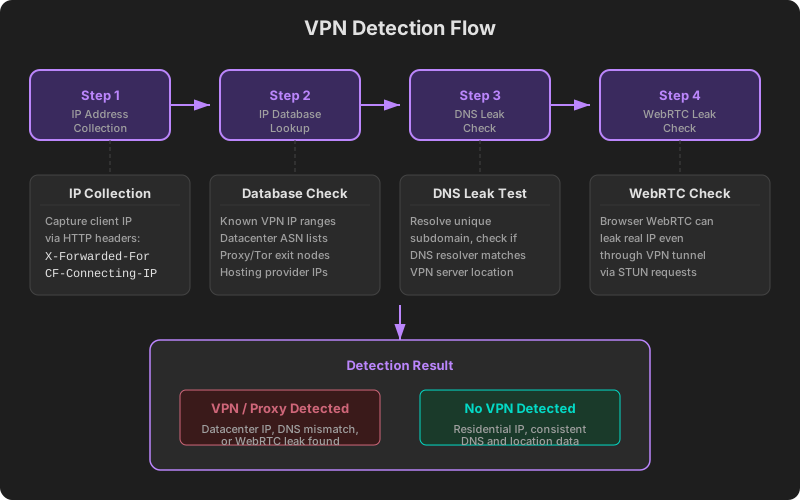
| Detectability | Detectable but easy to obfuscate | Detectable; some sites block Tor |
| P2P support | Generally supported | Not recommended (network strain) |
When to Use a VPN
- Streaming services — bypass geo-restrictions and access region-locked content.
- Everyday browsing — prevent your ISP from tracking your activity.
- Corporate networks — establish secure remote connections to company resources.
- Large downloads — maintain fast speeds while staying protected.
When to Use Tor
- Maximum anonymity — when you need the strongest possible identity protection.
- Censorship circumvention — access blocked websites in restrictive regions.
- Sensitive information — whistleblowing, journalism, or accessing confidential resources.
- Zero-trust environments — when you cannot trust even a VPN provider.
Combining Both: Tor over VPN and VPN over Tor
You can layer these tools for additional protection. Tor over VPN means connecting to a VPN first and then launching Tor. This hides your Tor usage from your ISP and adds an extra layer before the guard node. VPN over Tor routes traffic through the Tor network first and then through a VPN, encrypting exit node traffic. However, this setup is complex, very few VPN providers support it, and it can significantly reduce performance.
Neither Is Perfect
A VPN is only as trustworthy as its provider. If the provider keeps logs, your privacy can be compromised. Tor’s exit nodes can see unencrypted traffic, and its slow speeds make it impractical for many everyday tasks. Both tools can also be undermined by user behavior such as logging into personal accounts or accepting tracking cookies. No single tool guarantees 100% anonymity, so the right choice depends on your specific threat model.
Further Reading
- VPN Detection Methods Explained — learn how VPN traffic is identified and flagged.
- Network Security Basics — a foundational guide to staying safe online.